Industrial photography represents a specialized field that captures manufacturing processes, facilities, and products. This type of photography requires specific technical skills and equipment to document complex environments accurately. Many professionals compare the precision needed in this field to other detail-oriented industries, where even platforms like https://amerikaanseonlinecasino.com demand exact specifications for their visual content. The stakes are high when documenting industrial operations.
Professional photographers in this space must understand both technical photography principles and industrial environments. They work in challenging conditions that standard photographers rarely encounter.
But what makes this field so demanding? Let’s discover together.
The Complexity of Industrial Settings
Industrial locations present unique obstacles. Poor lighting, restricted access areas, and safety requirements create constant challenges. Photographers must adapt quickly to changing conditions while maintaining image quality.
Equipment needs differ significantly from traditional photography work. Heavy-duty gear that withstands harsh environments becomes essential. Dust, heat, and vibration can damage standard camera equipment within hours.
Essential Equipment Features
The right tools make industrial photography possible. Professional-grade cameras with robust weather sealing protect against environmental hazards. Full-frame sensors capture better detail in low-light manufacturing facilities.
Industrial photographers need cameras built for durability. Bodies should feature:
- Weather-sealed construction for dusty environments.
- High ISO performance for dim factory floors.
- Fast autofocus systems for moving machinery.
- Dual card slots for backup security.
- Extended battery life for long shooting sessions.
These features ensure reliability during critical documentation work. Missing a shot due to equipment failure can cost thousands in rescheduling fees.
Wide-angle lenses capture entire production lines in a single frame. Tilt-shift lenses correct perspective distortion in architectural and industrial shots. Macro lenses document intricate product details and quality control processes.
Each lens serves a specific purpose within industrial documentation. Photographers typically carry multiple options to handle varied assignments throughout a facility.
Lighting Techniques for Industrial Spaces
Factory floors rarely offer ideal lighting conditions. Overhead fluorescents create harsh shadows and unflattering color casts. Professional industrial photographers bring portable lighting systems to control every shot.
Strobe lights freeze fast-moving machinery. Continuous LED panels allow real-time exposure adjustments. Both systems have their place in the industrial photographer’s toolkit.
Sometimes adding artificial light proves impossible. Safety regulations or active production schedules limit equipment placement. Photographers must maximize existing light sources through careful exposure management.
Understanding white balance becomes critical here. Mixed lighting from windows, fluorescents, and sodium vapor lights creates color challenges. Shooting in RAW format provides flexibility during post-processing corrections.
Safety and Access Protocols
Industrial facilities operate under strict safety guidelines. Photographers must complete safety training before entering production areas. Hard hats, steel-toed boots, and high-visibility vests become standard gear.
Site managers often restrict access to sensitive areas. Building relationships with facility personnel helps navigate these limitations. Advance planning prevents wasted time and missed opportunities.
Planning Your Shoot
Successful industrial photography requires detailed preparation. Site visits identify optimal shooting locations and potential hazards. Creating shot lists ensures comprehensive coverage of required subjects.
Consider these planning elements:
- Coordinate with production schedules to minimize disruption. Scheduling shoots during slower periods or shift changes reduces the impact on productivity.
- Identify power sources for lighting equipment. Portable lighting systems require reliable electricity to function effectively.
- Map out emergency exits and safety stations. Knowing evacuation routes and first aid locations protects you during unexpected emergencies.
- Confirm permissions for specific areas or processes.Obtaining written authorization prevents access issues and legal complications during the shoot.
- Schedule sufficient time for setup and breakdown. Industrial lighting and safety equipment require careful installation and removal.
Thorough preparation separates amateur attempts from professional results. Clients expect photographers who understand industrial operations.
Post-Processing Considerations
Industrial images often need extensive editing. Removing distracting elements while maintaining authenticity requires skill. Color correction addresses mixed lighting issues captured during shooting.
Software proficiency matters as much as camera skills. Adobe Lightroom handles batch processing for large projects. Photoshop tackles complex retouching and compositing work.
Industrial clients value accuracy over artistic interpretation. Images must truthfully represent facilities and processes. Excessive editing that misrepresents reality damages credibility and client relationships.
Documentation photography follows different rules from creative work. The goal focuses on clear, honest representation rather than dramatic artistic statements.
Building Your Industrial Portfolio
Breaking into industrial photography requires strong portfolio pieces. Start with smaller manufacturers willing to trade services for images. Document diverse industries to demonstrate versatility.
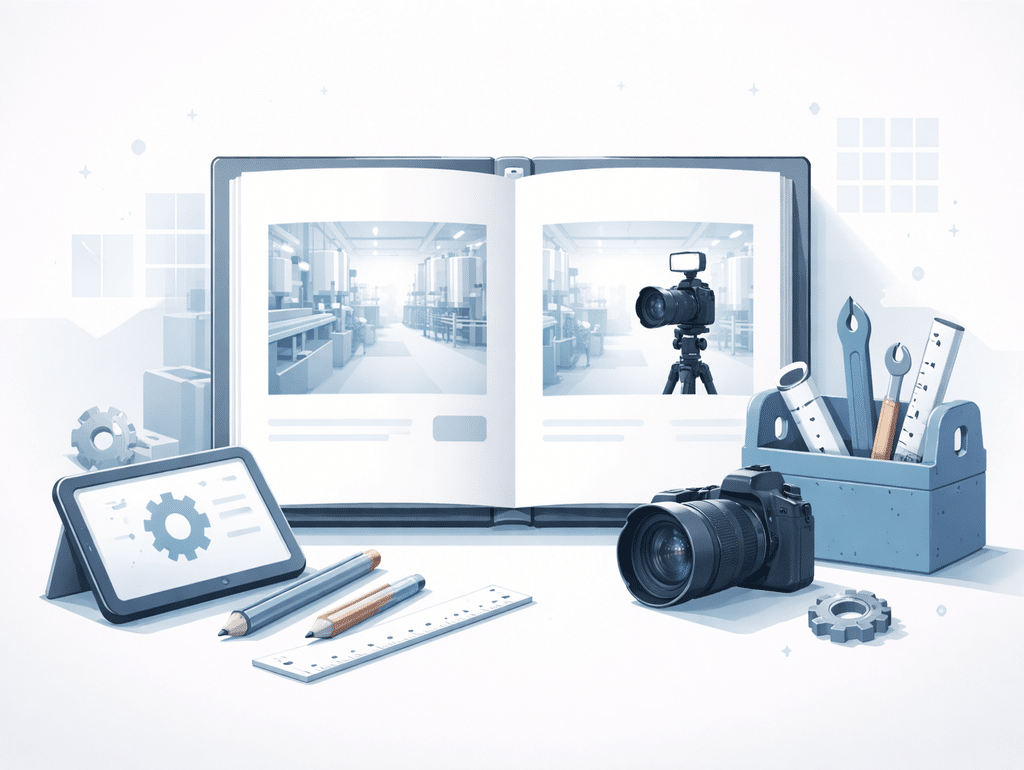
Your portfolio should showcase technical competence and problem-solving abilities. Include before-and-after comparisons showing how you handle difficult lighting. Feature various industrial sectors from food processing to heavy manufacturing.
Quality trumps quantity when selecting portfolio images. Ten exceptional shots outweigh fifty mediocre ones. Each image should demonstrate specific technical skills or creative solutions to industrial challenges.