Black-and-white photography did not become a classic because color was missing. This art form has remained part of culture because it speaks to the viewer in a different voice. Monochrome does not copy the world literally; it selects what matters most. When a person looks at a black-and-white image, the brain is less distracted by random details. What remains are lines, shadows, textures, facial expressions, and distances. An old photograph can feel surprisingly modern, even if the clothes, street, or technology in it belong to another era.
From Technical Necessity to an Independent Language
During the first decades of photography, images were black-and-white for purely technical reasons. One of the first permanent photographic images was created by Joseph Nicéphore Niépce using heliography in 1822. The process was long and complex, nothing like the kind of photography we know today. The first commercially successful color photography system was invented by the Lumière brothers in 1903. Over the long course of its existence, the color concept has never been able to displace the black-and-white one. Monochrome images appeared earlier and claimed their own territory, becoming both a way of recording reality and a way of thinking.
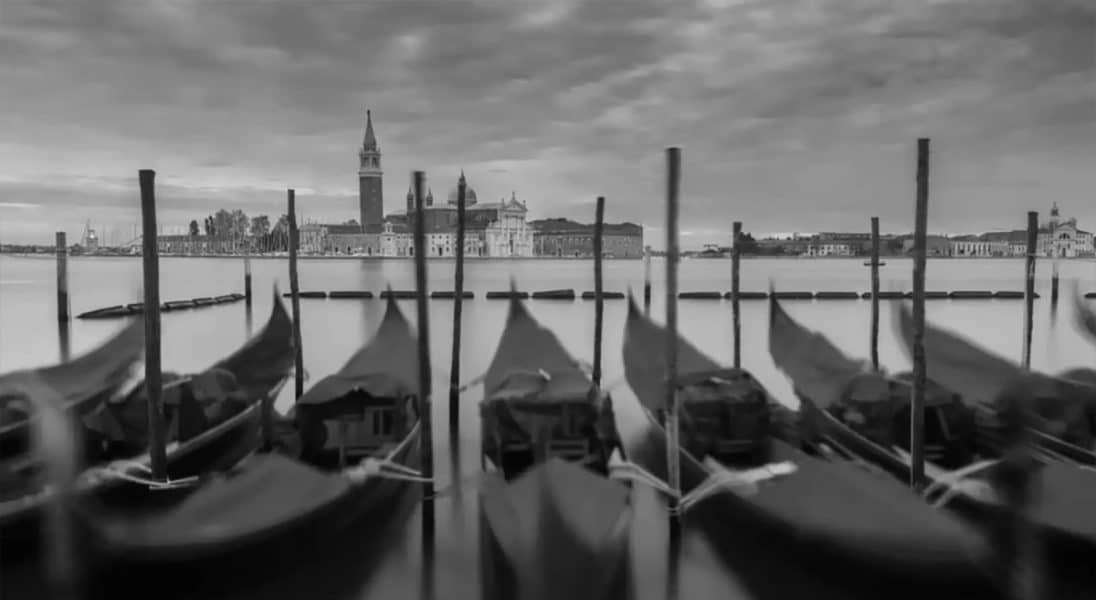
Why the Absence of Color Makes an Image Stronger
Color creates mood quickly. A monochrome image makes the eye study the photograph rather than simply recognize objects. In black-and-white photography, important nuances come to the foreground:
- light and the direction of shadow;
- contrast between dark and light;
- the texture of skin, stone, metal, and fabric;
- the geometry of the frame;
- facial expression and body position;
- empty space around the subject.
A black-and-white portrait can describe a personality more vividly. The color of the skin, clothing, or interior moves into the background. The face becomes almost like a landscape: wrinkles, the gaze, the line of the lips, the turn of the head. In a good monochrome portrait, a person does not look old-fashioned; they are seen from another angle. The same thing happens with landscapes. Wet asphalt, a subway staircase, a factory wall, and a night alley often become just locations when shown in color. In black and white, rhythm appears. The city begins to resemble a drawing, a stage, or a memory.
Ansel Adams and the Discipline of Tones
American photographer Ansel Adams became a legend because of his ability to make black-and-white photography extremely precise. His landscapes of the American West do not look like random, beautiful views. They are carefully calculated: where the deep shadow will fall, where the texture of the clouds will remain, and where the snow will not turn into a flat white spot.
Adams developed the Zone System, a method that helps photographers visualize the tonal range of a future image. In other words, the photographer was not simply pressing a button. He was planning how real light would become a scale from black to white. This is one of the reasons for the longevity of monochrome photography. It requires a clear vision of the scene: what will become the main focus, what will fade, and what will become a line.

Documentary Power That People Trust
Black-and-white photography is closely connected with documentary traditions. Newspapers, archives, war reports, and social projects of the twentieth century have reached us through monochrome images. This does not mean life was less colorful then. It simply means that the visual memory of an entire era took shape this way.
A striking example is “Migrant Mother,” a photograph taken by American photographer Dorothea Lange during the Great Depression. In the image, Florence Owens Thompson sits with her children, her gaze turned to the side and her face tense. The photograph became more than a portrait of one woman; it turned into an image of poverty, fatigue, and anxiety from an entire period in American history.
The black-and-white palette removes everything unnecessary here. There is no color of clothing, no domestic detail that might distract the viewer. There is only the face, the children, and the tightness of the space, all working like a brief testimony.
This is how an important cultural habit emerged: black-and-white imagery came to be associated with official style, archives, truth, and historical significance. Viewers often perceive a monochrome frame as less promotional and more direct.
Fashion, Cinema, and Urban Culture
Black-and-white photography has become firmly embedded in fashion, cinema, music covers, and magazine portraits. It has a rare quality: it can look both strict and bold. In fashion photography, monochrome helps emphasize the silhouette. A rock musician, jazz saxophonist, or actress in a black-and-white frame often looks as if they already belong to history, even if the photograph was taken yesterday.
In street photography, the black-and-white format handles the chaos of the street well: random passersby, shop windows, cars, posters, and rain. In such scenes, color sometimes competes with itself. Monochrome gathers the disorder into a composition.
Why the Digital Age Did Not Kill Monochrome
Today, smartphone cameras see in the dark better than film cameras of the past. It might seem that black-and-white photography should have long ago become nothing more than a decorative effect. But that did not happen. Social media feeds, banners, videos, and advertising images all fight for attention. Against this background, a calm black-and-white frame can sometimes look bolder than the most saturated color photograph.
There is another point as well. Modern viewers have become better at sensing visual falseness. Excessive editing, which makes images almost perfect, is quickly read by people as an advertising surface.
Black-and-white photography removes some information and, in doing so, strengthens what is most important. It makes a photograph less dependent on the season’s colors, fashion, brands, and the current palette. What remains in the frame are things that change more slowly and raise a question: what in this moment is worth seeing without color?